What are predictive analytics in business?
AI Predictive analytics uses historical and current data to identify patterns and forecast likely future outcomes. Businesses can use it for sales forecasting, demand planning, customer behaviour analysis, risk prediction and operational planning. It helps teams make proactive, data-driven decisions instead of relying only on assumptions or experience.
How can machine learning model help businesses?
Machine learning model analyses business data to identify patterns and generate predictions or recommendations. They can support use cases such as demand forecasting, customer churn prediction, fraud detection, predictive maintenance and lead scoring. Models can continuously improve as they are trained with relevant and updated data.
What business processes can AI predictive analytics improve?
AI predictive analytics can improve sales, inventory, procurement, customer management, finance and operations. For example, businesses can forecast product demand, identify customers at risk of leaving, predict cash flow trends or detect potential operational issues. These insights help organisations plan resources and act earlier.
Can predictive analytics software improve sales and demand forecasting?
Predictive analytics software can analyse historical sales, seasonal trends, customer behaviour, pricing and other factors to estimate future demand. Businesses can use these forecasts to plan inventory, production, purchasing and sales activities. This can help reduce stockouts, excess inventory and inaccurate demand planning.
Can predictive analytics integrate with ERP and CRM systems?
Yes. Predictive analytics solutions can integrate with ERP, CRM, databases and other business applications using APIs, data pipelines or direct system connections. This allows predictions to be used within existing workflows, such as forecasting inventory requirements or identifying high-value sales opportunities.
How accurate are predictive analytics services and ML models?
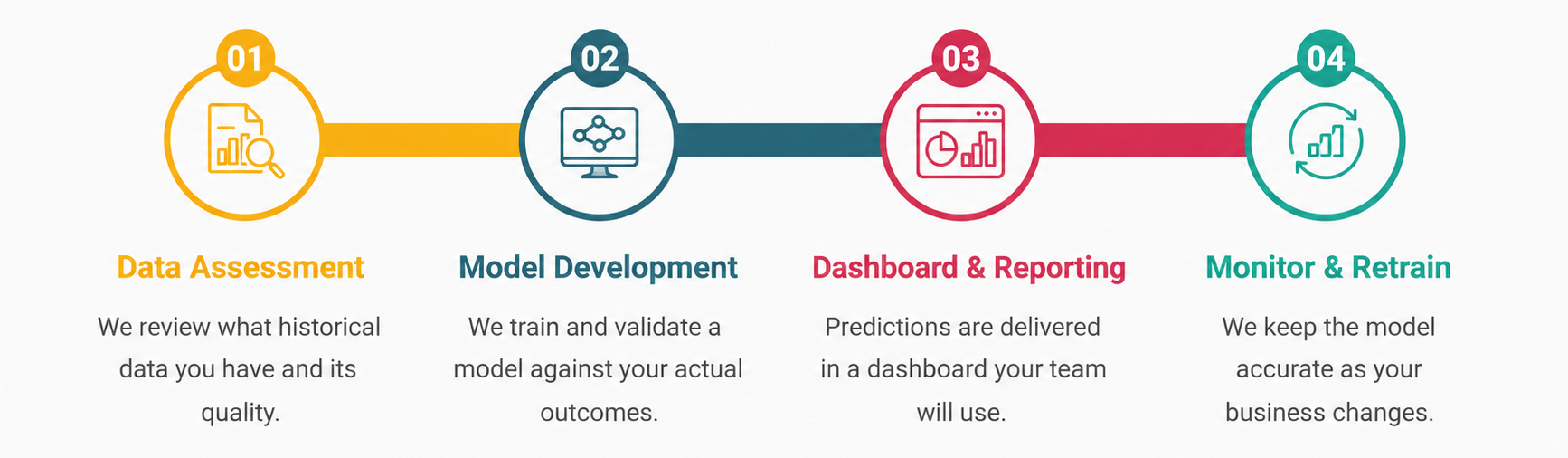
Model accuracy depends on data quality, the selected algorithm, the business problem and changing real-world conditions. Predictive models cannot guarantee every outcome, but they can provide useful probability-based insights. Regular monitoring, evaluation and retraining can help maintain model performance over time.
Can predictive analytics software support real-time decision-making?
Yes. Predictive analytics software can process continuously updated data to support real-time or near-real-time decisions. It can be used for fraud detection, anomaly detection, customer interactions and operational monitoring. The right approach depends on how quickly data changes and how fast the business needs to respond.